
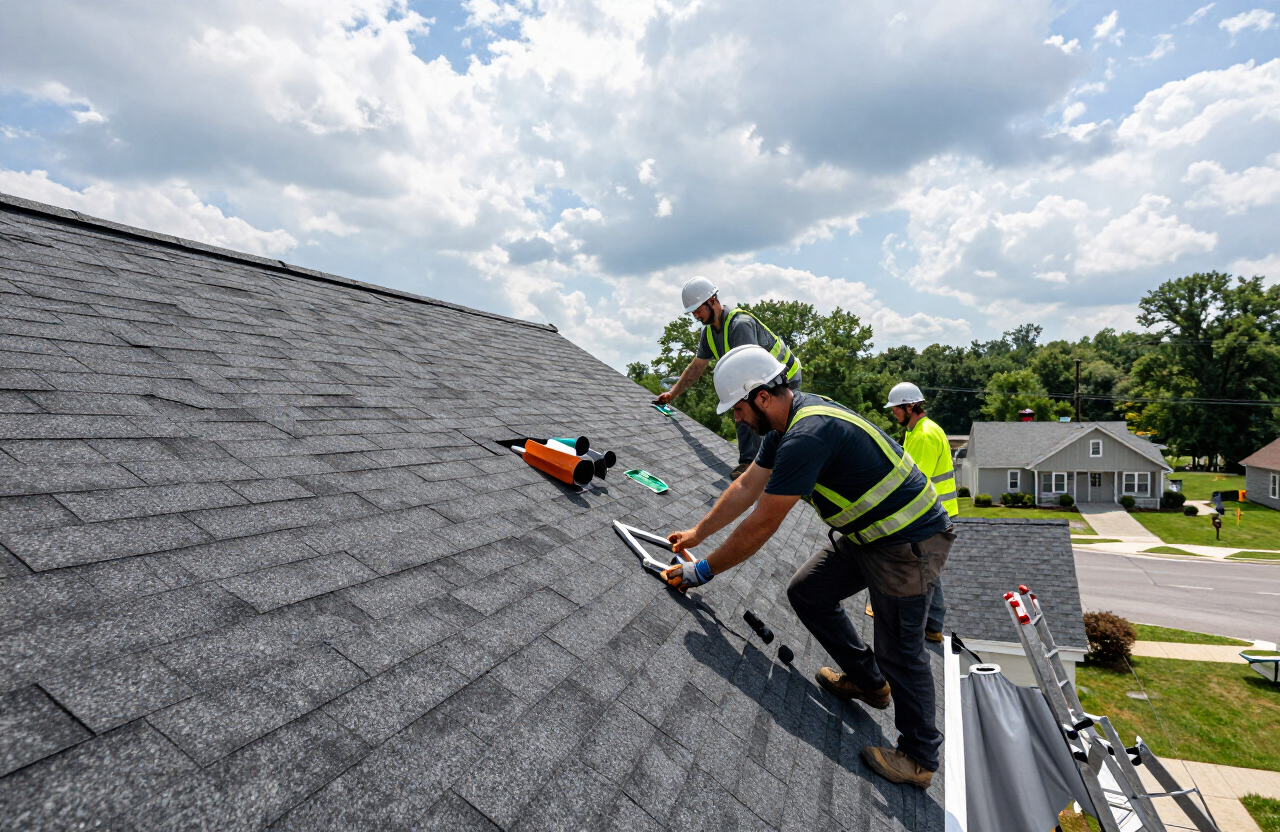
Residential Roofing
Roof repairs and replacement systems built for Ohio weather.
A repair or replacement can begin with a documented roof and exterior assessment that helps define project-specific needs.
Repair or replace?
A documented repair-or-replacement assessment
A 12-year-old roof with wind-lifted shingles doesn’t automatically need replacing — and a 25-year-old roof can’t always be patched. We document the deck, the ventilation, and the remaining service life, then tell you plainly which side of the line you’re on.
- Full tear-off to the deck when project scope and applicable manufacturer instructions call for it
- Ice & water shield in valleys and eaves, per applicable locally adopted requirements
- Synthetic underlayment and drip edge where applicable per manufacturer instructions and project scope
- Balanced intake and ridge ventilation sized to your attic
- Magnetic nail sweep and site cleanup as available cleanup practices
- Photo documentation of installation where included as an available documentation practice
Systems we install
Materials matched to Ohio weather
Architectural asphalt shingles
The Miami Valley workhorse. Class 3 and Class 4 impact-rated options designed to stand up to Ohio hail.
Standing-seam metal
A low-maintenance roof with strong wind ratings — ideal for farmhouses, modern builds, and owners looking for a long-lasting system.
Low-slope & flat systems
TPO, EPDM, and modified bitumen for additions, porches, and light-commercial buildings — detailed at every penetration and edge.
Roof-system explorer
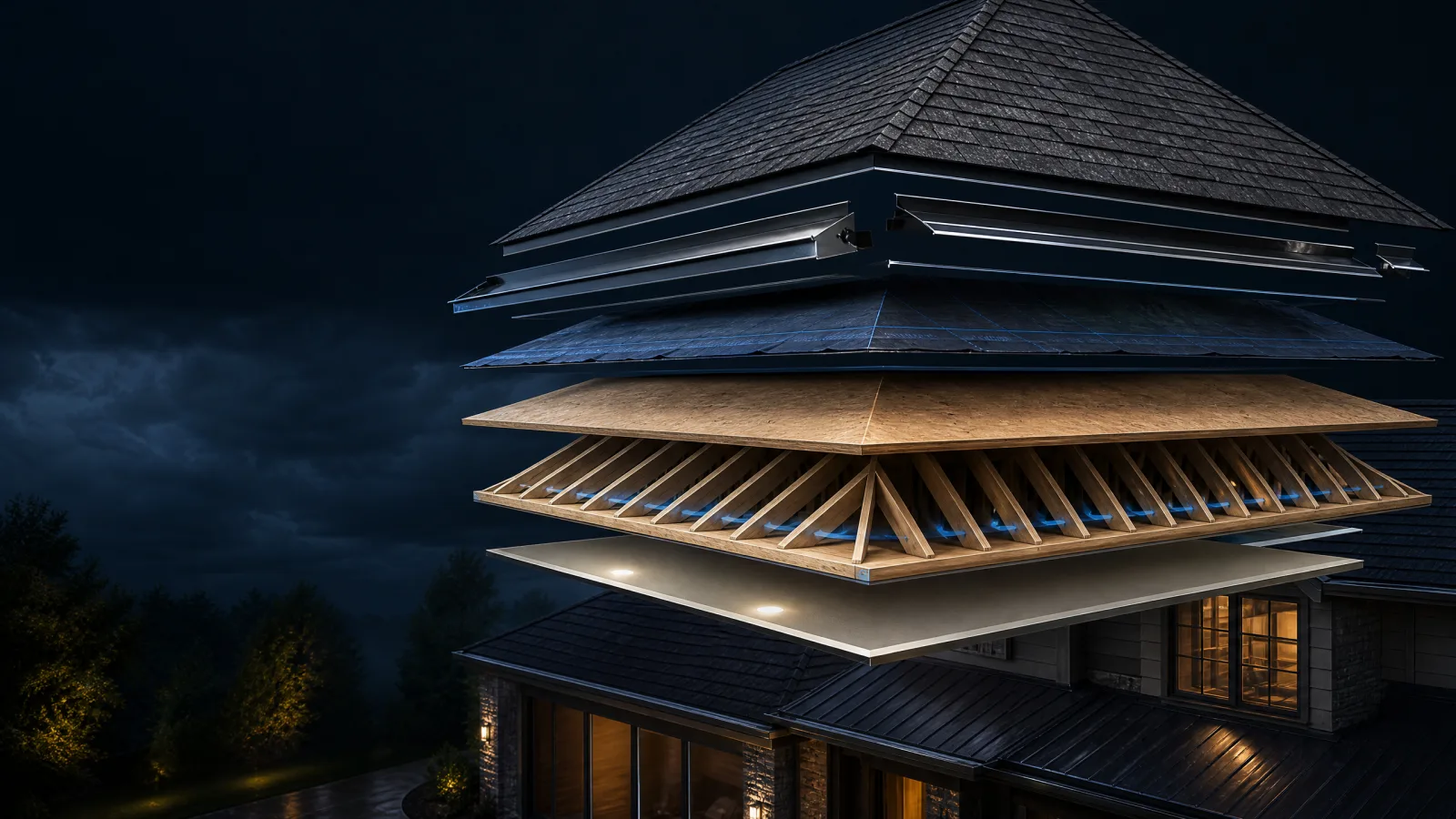
A roof is a system, not a surface
Shingles are only the weathering layer. Select a layer below to read how each part of the assembly contributes to a roof that holds up to Ohio weather.
Weathering surface
Surface material
The weathering surface — architectural shingles, standing-seam metal, or low-slope membrane — takes the direct hit from sun, rain, and hail. Impact-rated shingles and properly fastened metal shed water and resist wind uplift.
Assembly variations. Roof assemblies vary by building age, design, material, and locally adopted code requirements. This exploded view is illustrative; actual layering, fastening, and ventilation are determined by the specific project, manufacturer instructions, and applicable locally adopted requirements.
Roofing FAQ
Roofing questions, answered
Not sure if your roof needs repair or replacement?
Request a free documented assessment to discuss project-specific findings and next steps.